


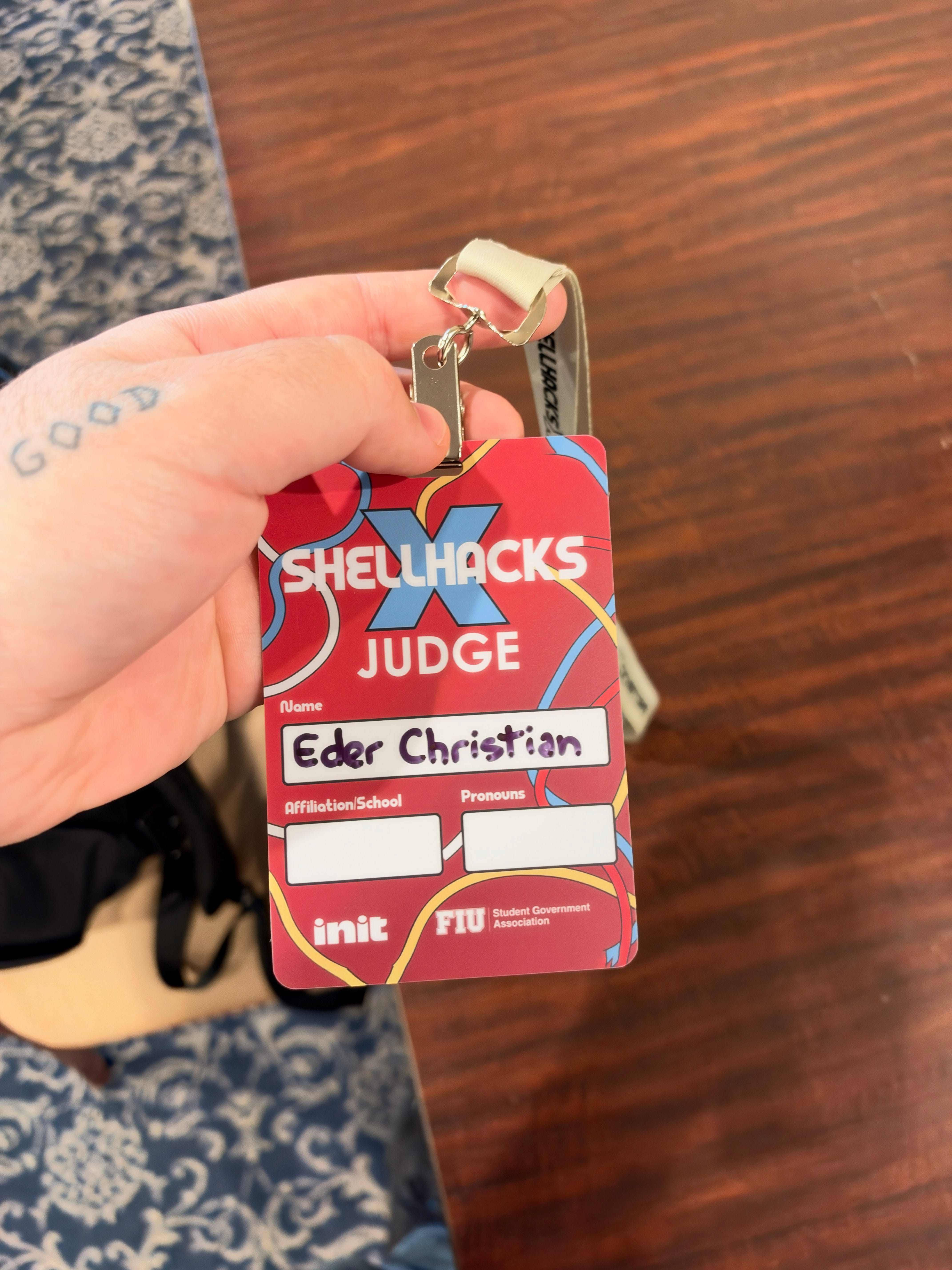
I flew from Brazil to Miami with a backpack, a rental car reservation and a judge badge waiting for me at Florida International University. Two days later I was home again, tired in the good way, with a phone full of notes.
15 projects, one afternoon, one score sheet
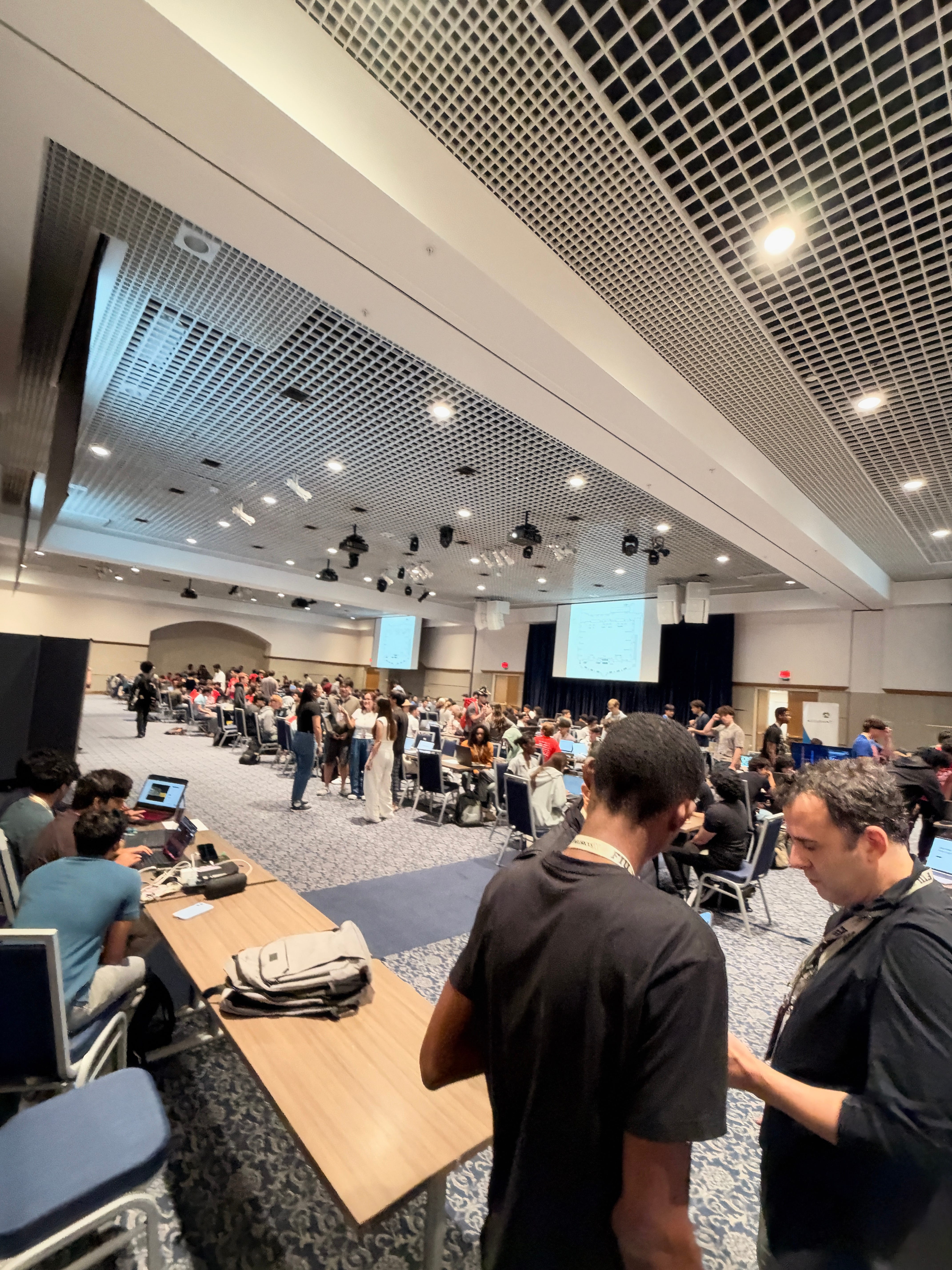
ShellHacks, the biggest hackathon in Florida, had 294 projects and 62 judges. Each team got three minutes to demo and two minutes of questions. Then each judge scored the project from 1 to 5 on completion, originality, learning, design, and technical depth. I logged every table I judged: the stack, the AI tools, the scores, the soft skills, the presentation.
Ten of my fifteen teams used Claude. Nine used Gemini for the APIs. Eight used Codex. After the fifth table, the tool column stopped telling me anything, because the scores that moved were somewhere else. Design had my lowest average, 3.47, and my four highest-scored projects all got a 4 or 5 on it. One team lost their internet and showed screenshots instead of a live demo. The idea was good, and it still finished last on my sheet.
Judges score how fast they understand you
Five minutes per team sounds like plenty until you’re on Table 11. At that point you are not evaluating ideas anymore; you are evaluating what you can verify before the timer runs out.
A live demo is the fastest proof that something works. A clear screen is the fastest proof that the team knows what matters. That’s why completion and design did most of the sorting on my sheet, even though the rubric weighs all five dimensions the same.
When building gets cheap, being understood gets expensive.
I see the same thing outside hackathons: in a pull request someone reviews between meetings, or a dashboard someone opens for ten seconds before making a decision.
One limit: these are fifteen projects scored by one judge, me. It’s a floor report, not a study. The project I scored highest, a 4.6 out of 5, did win a sponsor prize from a different panel, so at least my sheet wasn’t alone.
What AI did, what I did
Between tables I talked to Grok Bot, and it turned my voice notes into a table with stack, tools, scores and averages. It logged one table number wrong and marked a model as unknown when the team didn’t say which one. It could count which tools showed up. It couldn’t tell me which demo was honest or which screen made sense. That part was mine, one table at a time.
The model is free. Being understood never was, though.
Keep committing,
Eder